
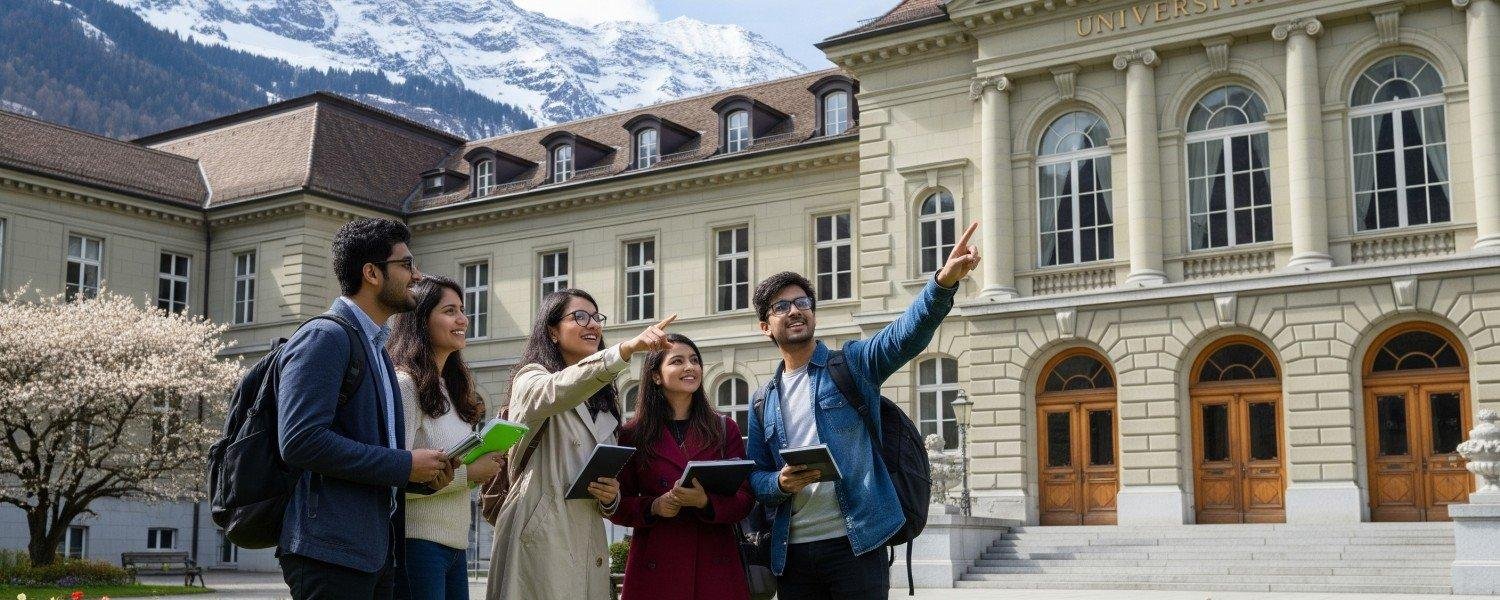
Switzerland offers an international learning environment, with universities and higher education institutions serving students from different countries and academic backgrounds.
The country has a higher education system that includes traditional universities, universities of applied sciences and arts, and universities of teacher education. These institutions have different academic profiles, giving students options that range from research-oriented study to professionally focused education.
Some reasons students consider Switzerland include:
- International learning environment: Swiss higher education institutions attract students and researchers from around the world.
- Research and innovation: The country has a strong focus on scientific research, technology and innovation.
- Different study pathways: Students can explore academic and applied programmes depending on their qualifications and career goals.
- Multilingual environment: German, French, Italian and Romansh are national languages, while English is used in many international academic settings.
- Cultural diversity: Students can experience different languages, traditions and regional cultures within one country.
- European location: Switzerland provides access to neighbouring countries and a wide range of cultural and travel experiences.
Choosing Switzerland should still involve careful consideration of the programme, teaching language, admission criteria, overall costs and future plans.
Understanding the Swiss Higher Education System
Switzerland’s higher education system includes different types of institutions. Understanding their roles can help international students identify the most suitable study environment.
1. Cantonal Universities and Federal Institutes of Technology
Traditional universities and federal institutes of technology generally focus on academic education, research and advanced study.
They offer programmes across disciplines such as:
- Business and economics
- Natural sciences
- Engineering
- Mathematics
- Humanities
- Social sciences
- Law
- Medicine and related fields, subject to programme-specific requirements
Some institutions are particularly research-oriented, while others have strengths in specific academic areas. Students should review the course structure, research areas and admission requirements of each institution before applying.
2. Universities of Applied Sciences and Arts
Universities of applied sciences and arts offer professionally oriented higher education. Their programmes often connect academic learning with practical applications and industry-related skills.
Fields may include:
- Business administration
- Engineering and technology
- Applied sciences
- Health-related disciplines
- Design and the arts
- Hospitality and tourism-related subjects
- Social work
Programme availability and admission requirements vary by institution and course. Some programmes may expect relevant professional experience or specific prior qualifications.
3. Universities of Teacher Education
Universities of teacher education focus on preparing and developing professionals for teaching and education-related roles.
Students interested in education should review the language requirements, teaching qualifications and professional recognition rules relevant to their intended career.
Swissuniversities provides information about the different types of higher education institutions and links to programme and admission information. Students should use the official website of their chosen institution to confirm current requirements.
Choosing a University in Switzerland
Selecting a university is one of the most important steps in preparing to study abroad. The right institution depends on the student’s academic background, preferred subject, language skills, budget and long-term objectives.
When comparing institutions, consider the following:
Programme Availability
Start by identifying institutions that offer the subject or qualification you want to pursue. Compare course content, duration, teaching methods, research opportunities and possible specialisations.
Admission Requirements
Admission criteria are not identical across Switzerland. Universities set their own requirements, and qualifications from other countries may be assessed differently depending on the institution and programme.
Swissuniversities publishes country-specific information on admission requirements, including information for applicants holding the Kenya Certificate of Secondary Education (KCSE). The requirements for the 2026/27 academic year should be checked against the relevant university’s current rules.
Language of Instruction
Check whether the programme is taught in English, German, French, Italian or another language. Some programmes may require evidence of language proficiency before admission.
Location
Consider the city or region where the institution is located. Accommodation availability, transport, living costs, language environment and access to relevant services can differ between locations.
Student Support
Review the support available to international students, including orientation, academic advice, accommodation guidance, career services and assistance with administrative procedures.
Useful starting points include the swissuniversities information on studies and the official admission information.
Popular Study Fields in Switzerland
The programmes available to international students vary by institution and level of study. Some broad fields students may wish to explore include:
Business and Management
Business-related programmes may cover management, finance, economics, marketing, entrepreneurship, international business and related subjects.
Students should compare course content and consider whether the programme offers opportunities such as projects, internships or research relevant to their career interests.
Engineering and Technology
Switzerland has higher education institutions offering programmes in engineering, computing, information technology, robotics, materials science and other technical disciplines.
Applicants should check the required mathematics, science and other subject prerequisites for their intended course.
Hospitality and Tourism
Switzerland has a long-established hospitality and tourism sector. Students interested in this field can investigate programmes in hospitality management, tourism, service management and related areas.
Programme structure, practical learning opportunities and professional requirements differ between institutions.
Science and Research
Students interested in scientific research can explore programmes in areas such as biology, chemistry, physics, environmental sciences and related disciplines.
For research-based postgraduate study, applicants should review faculty research interests, laboratory or project opportunities and supervisor requirements where applicable.
International Relations and Social Sciences
Students may also explore subjects such as international relations, political science, economics, development studies, sociology and public policy.
The language of instruction and any additional programme prerequisites should be checked before applying.
Admission Requirements for International Students
Admission requirements depend on the institution, programme, study level and the qualification presented by the applicant.
A qualification that meets the requirements of one university may not automatically satisfy the criteria of another.
Common application requirements can include:
- Completed application form
- Valid passport or identity document
- Secondary school certificate or previous academic qualifications
- Academic transcripts
- Proof of language proficiency, where required
- Curriculum vitae, where requested
- Motivation letter or statement of purpose, where requested
- Letters of recommendation, where required
- Portfolio, entrance examination or interview for selected programmes
Some courses have additional requirements, particularly where admission is competitive or where a specific academic background is essential.
Applicants With KCSE Qualifications
Students applying from Kenya should check the country-specific admission guidance published by swissuniversities and the entry criteria of their chosen institution.
For the 2026/27 academic year, swissuniversities lists the Kenya Certificate of Secondary Education as a relevant school-leaving qualification, but admission conditions can include additional academic or university-entry requirements. The applicable conditions vary by institution.
Applicants should therefore confirm:
- Whether their KCSE qualification is accepted for the intended programme
- Whether a particular subject combination is required
- Whether further university study or an entrance examination is necessary
- Whether proof of language proficiency is required
- Whether certified translations or other document formalities apply
Do not rely on general admission summaries alone. The university’s own admissions office is the appropriate source for a decision on an individual application.
How to Apply to a Swiss University
A structured application process can help students prepare documents and meet institutional deadlines.
Step 1: Identify Your Programme
Choose the subject, qualification level and preferred language of instruction. Check the programme’s duration, curriculum, entry criteria and application period.
Step 2: Compare Institutions
Review universities offering the programme and compare their academic focus, location, facilities, fees and international student support.
Step 3: Check Eligibility
Read the admission requirements for your country and qualification. If anything is unclear, contact the university’s admissions office before submitting an application.
Step 4: Prepare Your Documents
Gather the documents requested by the institution. These may include academic certificates, transcripts, identity documents, language results and supporting statements.
Check whether documents need to be certified, translated or submitted in a particular format.
Step 5: Submit Your Application
Apply through the university’s official application system and follow the instructions for the chosen programme.
Make sure you submit all required documents before the deadline and retain confirmation of your application.
Step 6: Respond to Additional Requests
The institution may ask for further documentation, an interview, an entrance examination or clarification of your academic history.
Respond within the stated time limits.
Step 7: Review Your Admission Decision
If you receive an offer, carefully review its conditions, response deadline, tuition information and any steps required to confirm your place.
An admission offer does not, by itself, guarantee a visa or residence permit.
Tuition Fees and Study Costs
The cost of studying in Switzerland depends on the institution, programme, city and student’s personal circumstances.
Swissuniversities indicates that tuition fees at many public universities are generally moderate compared with some international study destinations, with a commonly cited range of approximately CHF 500 to CHF 2,000 per semester. However, fees differ between institutions and programmes, and some universities or courses may charge more. International students may also be subject to specific fee arrangements.
In addition to tuition, students should budget for:
- Accommodation
- Food and groceries
- Local transportation
- Health insurance
- Study materials
- Personal expenses
- Residence permit and administrative costs, where applicable
- Travel to and from Switzerland
Prepare a Realistic Budget
Before applying, prepare a budget based on the city and institution you are considering.
A useful budget should include both one-time expenses, such as travel and initial accommodation costs, and recurring expenses, such as rent, food and transport.
Students should also consider funds for unexpected expenses and avoid relying on uncertain income from part-time work to cover essential costs.
Check the university’s current tuition schedule and any official financial documentation required for the visa or residence application.
Scholarships and Financial Support
Some international students may be eligible for scholarships, grants or other forms of financial support. Availability depends on the student’s nationality, academic background, study level, programme and the scholarship provider.
Potential sources of information include:
- The university’s scholarship or financial aid office
- Swiss Government Excellence Scholarships, where applicable
- Foundations and organisations offering education funding
- Scholarship programmes in the student’s home country
- External funding bodies relevant to the chosen field
Scholarship eligibility and application procedures can be specific to individual countries and academic levels. Students should check the current calls, deadlines, required documents and funding conditions through the official provider.
A scholarship should not be treated as confirmed funding until the student receives an official award.
Switzerland Student Visa and Residence Permit
International students may need a visa and residence permit to study in Switzerland. The process depends on nationality, the length and purpose of the stay, and the student’s circumstances.
Students from outside the EU/EFTA who require a visa for a long-term study stay generally need to apply for the appropriate national visa before travelling. The Swiss State Secretariat for Migration (SEM) explains that visa requirements depend on nationality and the purpose of entry.
General Preparation for a Student Visa
Depending on the case and the instructions of the responsible Swiss representation, applicants may be asked to provide documents such as:
- Valid passport
- University admission confirmation
- Completed visa application
- Evidence of sufficient financial means
- Information about accommodation
- Study plan or supporting statement
- Academic documents
- Other documents requested by the authorities
The exact requirements, appointment procedures and processing times must be confirmed with the Swiss representation responsible for the applicant’s place of residence.
Residence Permit After Arrival
Students staying in Switzerland for an extended period may need to register with the relevant local or cantonal authority and apply for a residence permit.
The responsible cantonal authority determines the applicable procedure and required documents. Students should follow the instructions provided with their visa and by their canton of residence, including any registration deadlines.
For official information, consult the Swiss State Secretariat for Migration and the Swiss representation responsible for your application.
Can International Students Work While Studying?
Work rules for international students depend on nationality, residence status, the type of employment and applicable cantonal requirements.
Some international students may be permitted to work part-time while studying, but permission is not automatic. Students should confirm the rules that apply to their situation before accepting employment.
For students from non-EU/EFTA countries, restrictions may include a waiting period after starting studies, limits on working hours and requirements for employer or cantonal approval. The conditions can vary, so students should verify the current rules with the relevant cantonal authority and university.
Part-time employment should not interfere with academic responsibilities or be assumed to provide enough income to meet all living expenses.
The Swiss State Secretariat for Migration’s working in Switzerland guidance provides information about work authorisation for foreign nationals.
Finding Student Accommodation in Switzerland
Accommodation is an important part of preparing for student life. Housing availability and costs vary by city, neighbourhood, institution and accommodation type.
Students can explore several options.
University Student Housing
Some universities provide student residences or share information about accommodation providers. Places may be limited, so students should check availability and application deadlines early.
Shared Apartments
Sharing an apartment with other students can provide a way to distribute housing costs and meet people from different backgrounds.
Before agreeing to a room, review the rental terms, deposit requirements, utilities and house rules.
Private Rentals
Private studios and apartments may offer more independence, but students should consider the total cost, lease duration, location and any additional charges.
Temporary Accommodation
Students arriving before a long-term rental begins may need temporary accommodation. Plan this in advance, particularly during busy university intake periods.
Always verify accommodation offers and avoid transferring money before checking the legitimacy of the landlord or provider and understanding the rental agreement.
Student Life in Switzerland
Student life in Switzerland can involve academic work, cultural activities, outdoor recreation and interaction with people from many backgrounds.
The experience will differ depending on the institution, location, programme and individual interests.
A Multilingual Environment
Switzerland has several national languages, and the language used in everyday life varies by region.
German is widely used in many parts of the country, French is prominent in the west, and Italian is used in the south. English is also used in many international and academic settings, but students should not assume it will be sufficient for every daily or administrative interaction.
Learning some of the local language can help students communicate, access services and participate in community life.
Culture and Recreation
Students can explore museums, historic towns, cultural events, lakes, mountains and local festivals. Switzerland’s public transport network also makes it possible to visit many destinations beyond the university city.
Outdoor activities such as hiking, cycling and winter sports may be available depending on the season, location and personal interests.
Academic Expectations
Students should familiarise themselves with the academic expectations of their institution, including attendance, independent study, assessments, academic integrity and communication with lecturers.
Universities may offer orientation programmes and academic support services to help new students adapt.
Health Insurance and Personal Wellbeing
Students should understand the health insurance requirements that apply to their residence status and personal circumstances.
Switzerland has specific health insurance rules, and exemptions or alternative arrangements may be subject to conditions and approval. Students should not assume that an existing policy from their home country will automatically meet Swiss requirements.
Before travelling, confirm:
- Whether Swiss health insurance is required
- Whether an exemption may apply
- The deadline for arranging coverage
- What medical services are covered
- How to access healthcare in the place of study
Students should also consider their personal wellbeing, including access to university counselling, student support services and local community resources.
Preparing for Your Arrival in Switzerland
Once admission and the relevant immigration steps are progressing, students can begin preparing for arrival.
Arrange Travel
Book travel in line with the visa or entry conditions and the university’s recommended arrival period. Confirm the location of the campus and how to reach your accommodation.
Organise Important Documents
Keep essential documents accessible, including:
- Passport and relevant visa
- Admission confirmation
- Accommodation details
- Insurance information
- Academic records
- Emergency contact details
Prepare for Registration
Check whether your canton or municipality requires registration after arrival, and identify the documents needed for the residence permit process.
Understand Local Transport
Review public transport options in your city and the routes between your accommodation, campus and essential services.
Attend Orientation
If your institution offers an international student orientation, attend where possible. These sessions may explain academic procedures, student services, local rules and practical arrangements.
Common Challenges for International Students
Moving to another country for education can be a significant adjustment. Preparing for common challenges can make the transition more manageable.
Adapting to a New Academic System
Teaching methods, assessment styles and academic expectations may differ from those students experienced previously. Use university orientation, academic advisers and learning support services to understand what is expected.
Managing Living Costs
Living expenses can be substantial. Create a realistic monthly budget, track spending and review available student support services.
Language and Cultural Adjustment
Students may need time to adapt to local languages, communication styles and social customs. Language learning and participation in student activities can help build confidence and connections.
Balancing Work and Study
Where student employment is permitted, balancing work and academic responsibilities requires careful planning. Students should remain within the conditions of their authorisation and prioritise their studies.
Building a Support Network
Joining student societies, attending university activities and connecting with classmates can help students establish friendships and find support during their studies.
A Practical Timeline for Planning Your Studies
The exact timeline depends on the university, programme and visa process. Students should use the institution’s published deadlines as the main reference.
9–12 Months Before Study
- Research programmes and institutions
- Review admission requirements
- Check language expectations
- Estimate tuition and living costs
- Investigate possible scholarships
6–9 Months Before Study
- Prepare academic and identity documents
- Arrange translations or certification if required
- Submit applications according to the programme deadlines
- Contact admissions offices if clarification is needed
After Receiving an Admission Decision
- Review the offer and confirm your place as instructed
- Check tuition payment and enrolment requirements
- Begin the applicable visa or residence process
- Investigate accommodation options
- Prepare any additional documents requested
1–3 Months Before Arrival
- Follow up on visa and permit procedures
- Confirm accommodation and travel arrangements
- Review insurance requirements
- Prepare essential documents
- Check the university’s orientation and registration information
After Arrival
- Complete required local registration
- Follow residence permit instructions
- Finalise enrolment and university administration
- Attend orientation
- Settle into accommodation and become familiar with local services
Frequently Asked Questions
Can international students study in Switzerland in English?
Yes, some Swiss higher education programmes are taught in English, particularly at certain postgraduate levels and in internationally oriented fields. However, language availability differs by programme and institution. Always confirm the language of instruction and any language test requirements with the university.
How much does it cost to study in Switzerland?
Costs depend on the university, programme, city and lifestyle. Swissuniversities reports that tuition fees at many public universities are commonly around CHF 500 to CHF 2,000 per semester, but fees vary and living expenses are additional. Check the current fee schedule and budget for accommodation, food, insurance, transport and personal costs.
Can Kenyan students apply to Swiss universities?
Kenyan students can explore applications to Swiss universities. Admission depends on the chosen institution, programme and assessment of the applicant’s KCSE or other qualifications. Swissuniversities publishes country-specific admission guidance, but the university makes the applicable admission decision.
Do international students need a visa to study in Switzerland?
Visa requirements depend on nationality, the duration and purpose of the stay, and individual circumstances. Students should check the current rules with the Swiss representation responsible for their place of residence and follow the official instructions for long-term study.
Can students work while studying in Switzerland?
Some international students may be allowed to work under specific conditions. The rules depend on nationality and residence status, and students may need approval or must comply with restrictions on working hours or when employment can begin. Confirm the applicable rules with the relevant canton before starting work.
Are scholarships available for international students?
Scholarships may be available through universities, government schemes and other funding organisations. Eligibility, award amounts, covered costs and application procedures vary. Students should check current scholarship calls and requirements directly with the funding provider.
Is accommodation provided by Swiss universities?
Some institutions offer student residences or accommodation guidance, but availability is not guaranteed. Students should contact their chosen university early and also research legitimate private rental options.
When should I apply to a Swiss university?
Application deadlines vary by institution, programme and study level. Some programmes have earlier deadlines for international applicants because of document assessment or visa processing. Check the official programme calendar and allow sufficient time for all required steps.
Can I remain in Switzerland after graduation?
Post-study options depend on nationality, qualification, employment circumstances and the immigration rules in force at the time. Students who hope to work in Switzerland after graduation should consult the relevant cantonal migration authority and official federal guidance rather than assume that a student residence permit automatically provides a right to remain or work.
Start Your Study Journey in Switzerland with GlobalLink Suisse
Studying in Switzerland begins with informed planning. Choosing a suitable programme, understanding admission requirements, preparing the necessary documents and arranging finances and immigration procedures can help students approach the process with greater confidence.
GlobalLink Suisse can support prospective international students with study orientation, destination information and guidance on preparing for an education journey in Switzerland. Each student’s academic background and circumstances are different, so programme eligibility, admission decisions and visa outcomes remain subject to the relevant institutions and authorities.
Interested in studying in Switzerland? Contact GlobalLink Suisse to discuss your study plans and explore the next steps towards your Swiss education experience.