
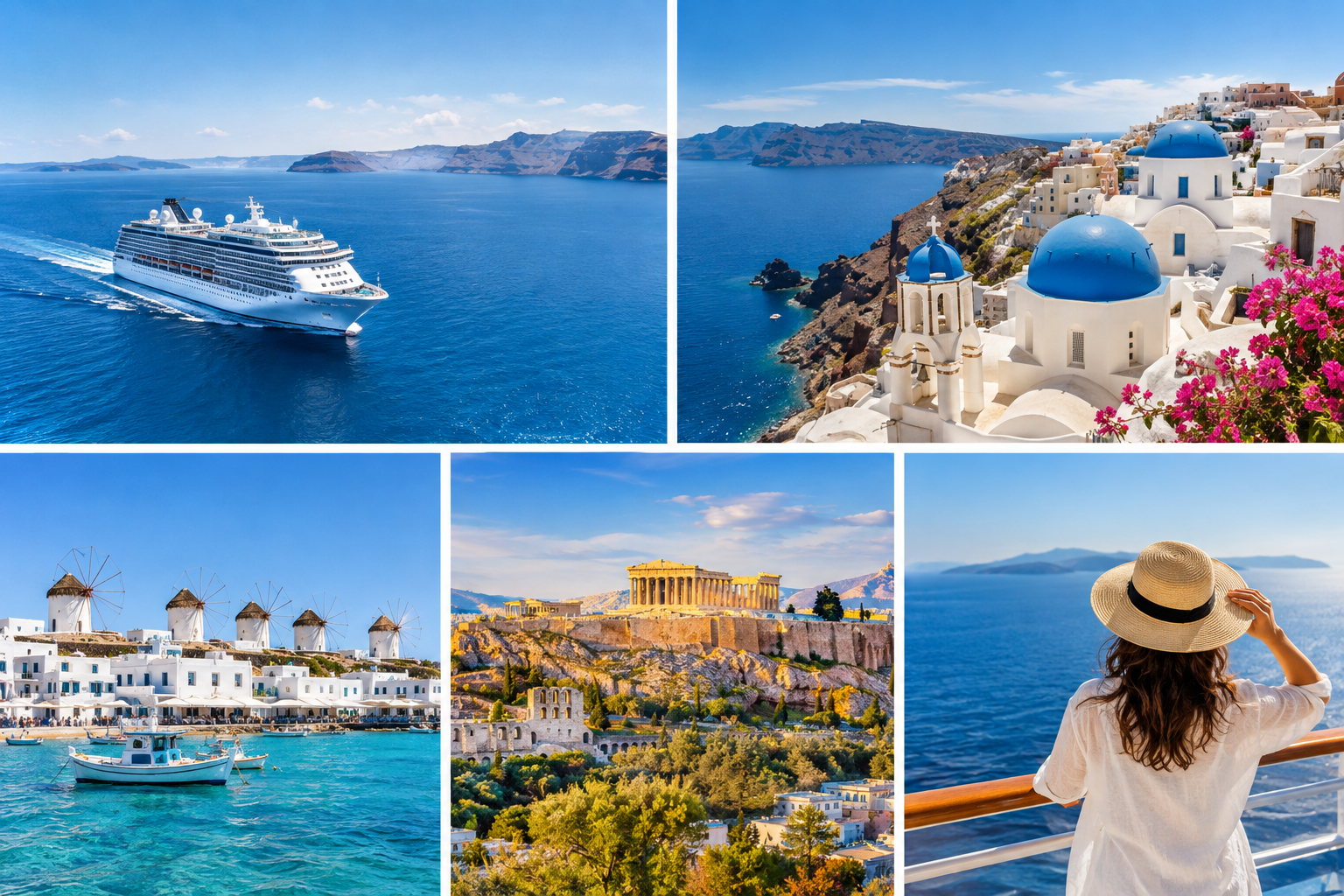
A cruise through the Greek Islands offers a way to experience the country’s coastal scenery, historic towns, traditional villages and distinctive island cultures in one journey. Travelling by sea allows visitors to enjoy the changing landscapes of the Aegean and Mediterranean, with each port offering a different perspective on Greece.
Some islands are known for whitewashed villages and dramatic sea views, while others are associated with ancient history, sandy beaches, lively harbours or green countryside. The right itinerary depends on the time available, preferred activities, cruise style and the islands included in the sailing route.
Whether you are planning a short Greek island cruise or a longer Mediterranean journey, this guide introduces some of the islands worth considering, explains what makes each one distinctive and shares practical advice for planning a cruise holiday.
1. Santorini: Dramatic Views and Volcanic Landscapes
<escape> </escape>
Santorini is one of Greece’s most recognisable island destinations. Located in the Cyclades, it is known for its volcanic landscape, whitewashed settlements and villages perched above the caldera.
<escape> </escape>
<text> </text>
Visitors arriving by cruise ship are often drawn to the views across the caldera, the island’s distinctive architecture and the opportunity to explore traditional settlements.
What to experience in Santorini
- Fira: The island’s lively capital, with shops, cafés, restaurants and viewpoints overlooking the caldera.
- Oia: A village known for its white buildings, blue details and panoramic views.
- Caldera scenery: The volcanic cliffs and sea views that give Santorini much of its distinctive character.
- Local food and wine: An opportunity to explore regional ingredients and food traditions.
- Archaeological sites: Places such as Akrotiri offer insight into the island’s ancient past.
Cruise visitors should check how passengers travel from the ship to shore. Depending on the ship and port arrangements, transfers may involve tender boats and local transport. Time ashore can be limited, so it is useful to choose a few priorities before arrival.
Santorini can be a suitable stop for travellers interested in photography, scenic viewpoints, history and local culture.
2. Mykonos: Beaches, Harbour Life and Island Energy
<escape> </escape>
Mykonos is another well-known Cycladic island, recognised for its traditional whitewashed buildings, windmills, waterfront lanes and lively social scene. It combines historic island character with beaches, restaurants, shops and entertainment.
What to experience in Mykonos
- Mykonos Town: Explore narrow streets, traditional architecture, boutiques and cafés.
- The windmills: A familiar landmark overlooking the town and coastline.
- Little Venice: A waterfront area with buildings close to the sea and views across the harbour.
- Beaches: The island has a range of beaches, from organised coastal areas to quieter stretches.
- Delos excursions: Depending on the available schedule, visitors may be able to take a boat excursion to the nearby archaeological island of Delos.
Mykonos can appeal to visitors interested in beach experiences, shopping, dining and nightlife. Cruise passengers should consider the time required to travel between the port, town and beaches, and allow enough time to return to the ship.
3. Crete: History, Food and Diverse Landscapes
<escape> </escape>
Crete is Greece’s largest island and offers a broad range of experiences, from archaeological sites and historic towns to beaches, mountain scenery and traditional villages. Its size and variety mean that cruise itineraries usually focus on a particular port and nearby attractions rather than attempting to cover the whole island.
What to experience in Crete
- Heraklion: A major port city with museums, markets and access to important archaeological attractions.
- Knossos: An archaeological site associated with the ancient Minoan civilisation.
- Chania: A historic town known for its harbour, old streets and architectural influences.
- Local cuisine: Traditional dishes featuring local produce, olive oil, herbs and regional cheeses.
- Coastal scenery: Beaches and coastal landscapes that vary across the island.
Crete can suit travellers interested in history, food, culture and varied scenery. Since distances can be significant, visitors should select excursions based on the ship’s port and departure time.
4. Rhodes: Medieval Heritage and Coastal Attractions
<escape> </escape>
Rhodes is part of the Dodecanese island group in the southeastern Aegean. It is known for its medieval Old Town, historic landmarks, beaches and a blend of cultural influences.
What to experience in Rhodes
- Medieval Old Town: Walk through historic streets, squares and fortified areas.
- Palace of the Grand Master: A prominent historic landmark within the Old Town.
- Mandraki Harbour: A waterfront area for a walk and views of the port.
- Lindos: A village known for its whitewashed buildings and hilltop acropolis, accessible by road from the main port area.
- Beaches: Rhodes offers a variety of coastal settings, depending on where visitors travel.
The Old Town is a convenient focus for visitors who prefer to explore close to the port. Those planning to visit Lindos or other parts of the island should consider travel time and the length of their shore excursion.
Rhodes is particularly interesting for travellers who enjoy history, architecture and coastal experiences in the same destination.
5. Corfu: Green Scenery and Venetian Influence
<escape> </escape>
Corfu lies in the Ionian Sea, west of mainland Greece. Compared with many of the drier Aegean islands, Corfu is known for its greener landscapes, olive groves, coastal scenery and historic architecture.
What to experience in Corfu
- Corfu Old Town: Explore narrow streets, squares and historic buildings shaped by different periods of European influence.
- Old and New Fortresses: Historic fortifications that overlook parts of the town and coastline.
- Liston Promenade: A popular area for walking, cafés and people-watching.
- Coastal villages: Explore selected villages and seaside areas on an organised excursion.
- Local cuisine: Discover regional dishes influenced by the island’s history and Mediterranean setting.
Corfu may appeal to visitors who enjoy architecture, relaxed town exploration, gardens and scenic drives. The island’s varied geography means that an excursion beyond the main town should be planned with the available time in mind.
6. Naxos: Traditional Villages and Long Beaches
<escape> </escape>
Naxos is one of the largest islands in the Cyclades. It offers a combination of beaches, mountain villages, archaeological remains and traditional island life.
What to experience in Naxos
- Naxos Town: Explore the waterfront, old town lanes and the historic Venetian quarter.
- Portara: The monumental marble doorway associated with an ancient temple, overlooking the harbour.
- Mountain villages: Discover inland settlements and local traditions.
- Beaches: Naxos has long sandy beaches and coastal areas suitable for relaxation.
- Local food: Sample regional products and dishes that reflect the island’s agricultural traditions.
Naxos can offer a varied island experience for visitors interested in culture, food and beaches. It may be included in itineraries that focus on the Cyclades, although cruise access and port arrangements vary by vessel and sailing.
7. Paros: Harbour Towns and Cycladic Charm
<escape> </escape>
Paros is located in the central Cyclades and is known for its traditional villages, beaches, small harbours and whitewashed architecture. It is often combined with nearby islands on multi-stop itineraries.
What to experience in Paros
- Parikia: The island’s main town, with a harbour, old streets and historic sites.
- Naoussa: A picturesque fishing harbour with waterfront restaurants and narrow lanes.
- Traditional villages: Explore settlements that offer a quieter view of island life.
- Beaches: Choose from organised beaches and more relaxed coastal areas.
- Local crafts and food: Discover shops, cafés and regional products.
Paros can be a good stop for travellers looking for a mix of town exploration, local culture and time by the sea. The island is also close to Antiparos, which may be included in some boat excursions or longer island-hopping plans.
8. Milos: Sea Caves and Unusual Coastal Landscapes
<escape> </escape>
Milos is a volcanic island in the Cyclades, known for its unusual rock formations, colourful coastal settlements and beaches shaped by volcanic activity. Its coastline is one of the main attractions for visitors arriving by sea.
What to experience in Milos
- Sarakiniko: A striking coastal area with pale volcanic rock formations.
- Kleftiko: A coastal landscape known for sea caves and rock formations, commonly explored by boat.
- Traditional fishing settlements: Visit places such as Klima, known for its colourful waterfront buildings.
- Plaka: The island’s hilltop capital, with traditional streets and views.
- Beaches and coves: Discover coastal areas with different rock colours and formations.
Milos is particularly appealing for travellers interested in coastal scenery, photography and boat excursions. Some of its most distinctive shoreline features are best appreciated from the water, making it a natural destination to consider for a sea-focused itinerary.
9. Hydra: A Car-Free Island Experience
<escape> </escape>
Hydra is part of the Saronic Islands, close to mainland Greece. Its harbour, stone architecture and pedestrian-focused character give it a different atmosphere from many larger Greek islands.
What to experience in Hydra
- Hydra Harbour: A picturesque waterfront lined with traditional buildings, cafés and restaurants.
- Historic architecture: Explore stone mansions and narrow streets.
- Coastal walks: Discover walking routes and viewpoints around the island.
- Art and culture: Visit galleries and cultural spaces where available.
- Seaside relaxation: Enjoy the island’s waterfront and swimming spots.
Hydra can be considered for shorter cruises or sailing journeys from the Athens area. Since motor vehicles are restricted on much of the island, visitors often explore on foot or use local transport options where available.
10. Corfu, Kefalonia and the Ionian Island Experience
<escape> </escape>
The Ionian Islands offer a different landscape from the Cyclades. The region is known for greener hills, olive groves, coastal cliffs and sheltered bays. Depending on the itinerary, a cruise may include Corfu, Kefalonia or other islands in the Ionian group.
Kefalonia
Kefalonia is known for dramatic coastal scenery, mountain landscapes and villages. Visitors may explore selected beaches, viewpoints and towns through organised excursions.
Paxos and Antipaxos
These smaller islands are known for coastal scenery, clear waters and sea caves. They are often explored by smaller vessels, sailing boats or day excursions rather than large cruise ships.
Choosing an Ionian route
The Ionian can suit travellers interested in greener landscapes, coastal villages and a more relaxed atmosphere. Cruise routes vary, so visitors should check which ports are included and how much time is available at each stop.
11. Choosing the Right Greek Islands Cruise Route
The best route depends on the number of days available, the cruise departure port and the type of experience you want. Some itineraries focus on the Cyclades, while others include islands from different groups or combine Greek ports with destinations elsewhere in the Mediterranean.
Classic Cyclades route
A route featuring islands such as Mykonos, Paros, Naxos and Santorini can introduce visitors to the architecture, beaches and landscapes commonly associated with the Cyclades.
This type of itinerary may suit first-time visitors who want to experience several well-known islands in one trip.
Historic and cultural route
A cruise that includes Rhodes, Crete and other historic destinations can offer opportunities to explore archaeological sites, medieval architecture, museums and local traditions.
This route may appeal to travellers whose main interests are history, heritage and cultural experiences.
Ionian route
An itinerary featuring Corfu and other Ionian destinations can offer greener scenery, coastal towns and opportunities to explore the region’s distinct architecture and landscapes.
Short cruise from Athens
Travellers with limited time may consider a short cruise or boat trip around the Saronic Gulf, with islands such as Hydra, Poros and Aegina. These destinations are relatively accessible from Athens and can provide an introduction to island travel by sea.
Cruise routes, port calls and shore-excursion options vary by operator and departure date. Always check the confirmed itinerary before making travel arrangements.
12. When Is the Best Time to Take a Greek Islands Cruise?
The main Greek island cruise season generally runs from spring into autumn, although schedules vary by cruise operator and route.
Spring
Spring can bring milder temperatures and landscapes with seasonal greenery and flowers. Some services and excursions may operate on reduced schedules compared with the peak summer months.
Summer
Summer is a popular time for Greek island cruises, with warm weather and many tourism services operating. It can also bring busier ports, popular attractions and high temperatures. In the Cyclades, seasonal northerly winds known as the meltemi can affect sea conditions and sailing plans.
Autumn
Early autumn can offer warm conditions and opportunities to explore after the busiest summer period. As the season progresses, some tourism services and cruise schedules may become more limited.
Travellers should consider their preferred weather, crowd levels, itinerary and available sailing dates when choosing a cruise.
13. What to Consider Before Booking
Before selecting a Greek Islands cruise, review the practical details of the trip rather than focusing only on the destinations listed in the itinerary.
Cruise duration
A short cruise may include a small number of ports, while a longer itinerary can cover more islands or combine Greece with other Mediterranean destinations. Consider how much time you want to spend at sea and how much time you would like ashore.
Ship size and port access
Large cruise ships and smaller vessels may have different port access and excursion arrangements. Some destinations may require tender boats to transfer passengers between the ship and shore.
Shore excursions
Review the available excursions and estimate how much time is spent travelling compared with time at each attraction. Independent exploration may be possible in some ports, but visitors should remain aware of the ship’s departure time and return arrangements.
Included services
Compare what is included in the cruise fare, such as meals, transfers, guided excursions or onboard activities. Inclusions differ between operators and packages, so check the booking terms carefully.
Accessibility and mobility
Travellers with mobility requirements should ask the cruise operator about boarding arrangements, tender access, walking distances, steps and accessibility at ports and attractions.
Travel documents
Check passport validity, entry requirements and any visa requirements that apply to your nationality and itinerary. If the cruise includes destinations outside Greece or the Schengen Area, confirm the requirements for every country on the route.
14. Cruise Holiday or Independent Island Hopping?
A cruise and an independent island-hopping holiday both offer ways to explore Greece by sea, but they provide different travel experiences.
| Feature | Cruise holiday | Independent island hopping |
|---|---|---|
| Accommodation | Usually remains on the ship | Booked separately on each island |
| Travel between destinations | Set by the cruise itinerary | Planned around available ferry or boat services |
| Time ashore | Determined by port schedule | Can be adjusted by choosing how long to stay |
| Planning | Many travel arrangements are handled by the operator | Traveller coordinates transport and accommodation |
| Destination choice | Limited to the confirmed itinerary | More flexible, subject to transport connections |
| Travel pace | Moves according to the sailing schedule | Can include longer stays on selected islands |
A cruise may suit travellers who prefer to unpack once and visit several ports within a set schedule. Independent island hopping may suit those who want to spend more time in particular destinations and arrange their own accommodation and transport.
Neither option is suitable for every traveller. The right choice depends on preferred pace, budget, interests and the level of planning desired.
15. Practical Tips for a Comfortable Greek Islands Cruise
A little preparation can help make time at sea and ashore more comfortable.
- Pack for the season: Bring clothing suited to the forecast, along with comfortable walking shoes.
- Carry sun protection: Sunglasses, a hat and sunscreen can be useful during outdoor excursions.
- Keep essentials accessible: Carry identification, necessary medication and important travel documents securely.
- Plan each port day: Choose the places you most want to see and allow time for transport and returning to the ship.
- Check local conditions: Weather and sea conditions can affect excursions and tender operations.
- Respect local communities: Follow site rules, dress appropriately for religious or cultural locations and be considerate in residential areas.
- Keep some flexibility: Port schedules and excursions can change because of operational or weather-related circumstances.
Frequently Asked Questions
Which Greek islands are commonly included in cruises?
Popular cruise destinations include Santorini, Mykonos, Crete and Rhodes. Depending on the route, cruises may also visit islands such as Corfu, Naxos, Paros or Hydra, as well as other Mediterranean destinations.
How many Greek islands can I visit on a cruise?
The number depends on the cruise duration, departure port and itinerary. A shorter cruise may include a few ports, while a longer voyage can visit more islands and destinations across the Mediterranean. Check the operator’s confirmed itinerary for the exact port calls.
Is a Greek Islands cruise suitable for a first visit to Greece?
A cruise can provide an introduction to several islands in one trip. However, time ashore is usually limited by the ship’s schedule. Travellers who want to explore one island in depth may prefer to spend several nights there or combine a cruise with a land-based stay.
What is the difference between a Greek Islands cruise and a Mediterranean cruise?
A Greek Islands cruise focuses mainly on Greek ports and islands. A Mediterranean cruise may include Greek destinations alongside ports in countries such as Italy, Croatia, Turkey, France or Spain, depending on the itinerary.
Can I visit Santorini and Mykonos on the same cruise?
Some cruise itineraries include both islands, but this depends on the departure date and operator. Travellers should check the confirmed route and time ashore at each destination before booking.
Are Greek island cruises available outside summer?
Some cruise operators schedule sailings during spring and autumn, but availability varies by route and year. Travellers should check the current cruise calendar for their preferred dates.
Do cruise ships dock directly at every Greek island?
No. Port arrangements differ by destination and vessel. Some ships dock at a pier, while others may anchor offshore and use tender boats to transfer passengers to shore. This can affect accessibility and the time available for excursions.
Should I book shore excursions in advance?
Booking in advance can help travellers organise popular activities, but the best approach depends on the destination, excursion and cruise operator. Check cancellation terms, meeting points, travel times and the ship’s return schedule before booking.
A Greek Islands cruise can bring together dramatic coastlines, historic towns, traditional villages, beaches and varied regional cultures in a single holiday. Santorini and Mykonos offer iconic Cycladic scenery and lively island experiences, while Crete and Rhodes provide opportunities to explore Greece’s rich history. Corfu, Naxos, Paros, Milos and Hydra each offer their own landscapes and character.
The most suitable itinerary depends on the islands you want to explore, the time available and the style of travel you prefer. By reviewing the confirmed route, port arrangements, season and shore excursions before booking, travellers can plan a cruise that matches their interests and expectations.
Explore Greek Islands and Mediterranean cruise opportunities with GlobalLink Suisse and start planning your next journey by sea.