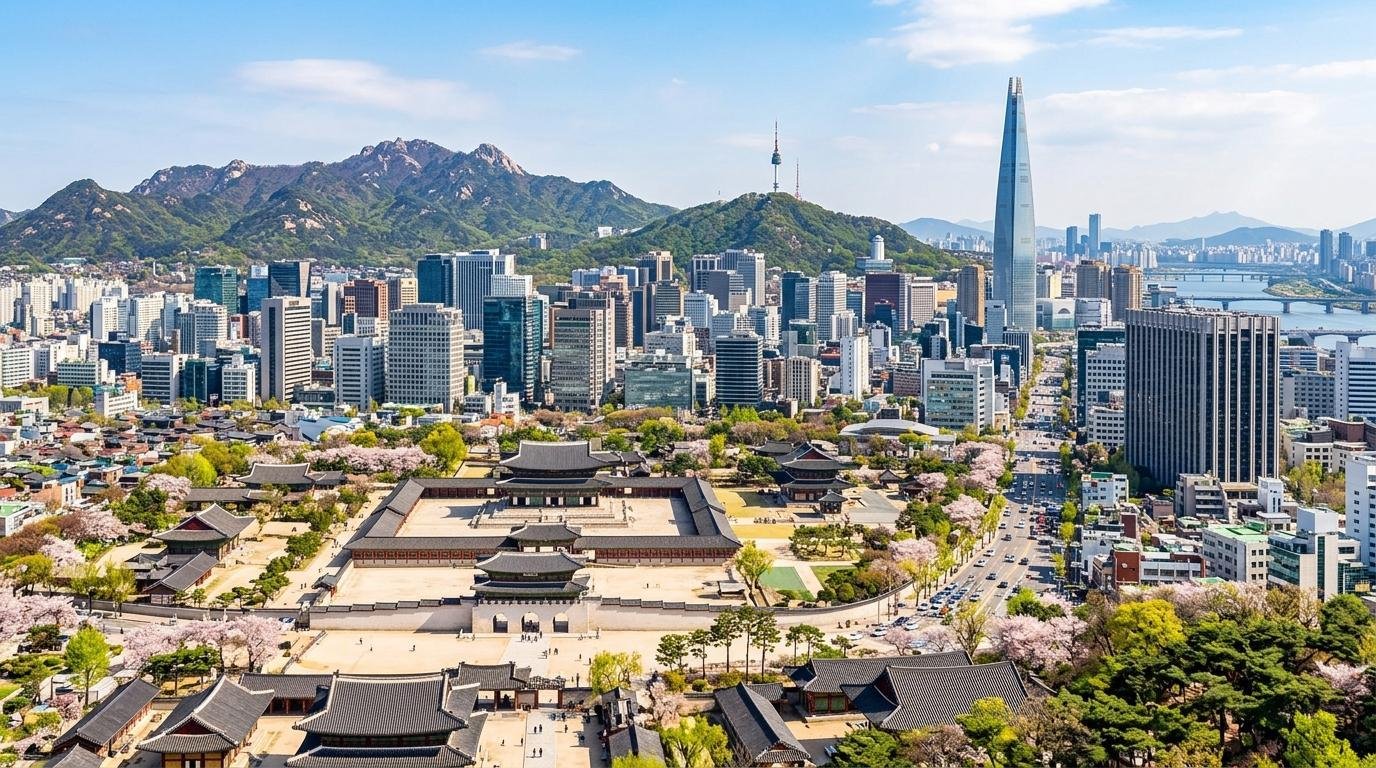
Seoul, the vibrant capital of South Korea, is one of Asia’s most exciting travel destinations. Combining centuries-old royal palaces, traditional Korean neighbourhoods, modern skyscrapers, lively shopping districts and world-famous food culture, Seoul offers unforgettable experiences for every type of traveller.
From exploring the historic Gyeongbokgung Palace to discovering Korean street food in Myeongdong and enjoying panoramic city views from N Seoul Tower, Seoul provides an extraordinary blend of history, entertainment and contemporary culture.
The city is also internationally recognised for its K-pop entertainment, Korean beauty industry, fashion trends and innovative technology.
Whether you are planning a cultural holiday, family adventure, romantic getaway or your first visit to South Korea, this Seoul travel guide explores the best attractions, activities and practical tips to help you plan your journey with GlobalLink Suisse.
Why Visit Seoul, South Korea?
Seoul offers a remarkable combination of traditional Korean heritage and modern urban experiences.
Visitors can explore historic royal palaces in the morning, discover traditional markets in the afternoon and enjoy the city’s vibrant nightlife in the evening.
The city is particularly attractive because of its extensive public transportation network, diverse accommodation options and wide range of attractions.
Seoul is also an excellent destination for travellers interested in Korean cuisine, shopping, cultural festivals and entertainment.
With beautiful seasonal landscapes throughout the year, the city offers memorable experiences during spring, summer, autumn and winter.
Best Places to Visit in Seoul
1. Gyeongbokgung Palace: Discover Korean Royal History
Gyeongbokgung Palace is one of Seoul’s most important historical attractions.
Originally constructed in 1395 during the Joseon Dynasty, the palace served as the principal royal residence.
Today, visitors can explore impressive gates, traditional courtyards, historic halls and beautifully landscaped grounds.
One of the most popular experiences is watching the ceremonial changing of the royal guard, held on scheduled days.
Many visitors also choose to wear traditional Korean clothing, known as hanbok, while exploring the palace.
Gyeongbokgung Palace is an essential destination for travellers interested in Korean history and architecture.
2. Bukchon Hanok Village: Traditional Korean Architecture
Bukchon Hanok Village is a historic residential neighbourhood famous for its traditional Korean houses, known as hanok.
Located between major royal palace areas, the village features narrow streets, tiled rooftops and beautiful traditional architecture.
Visitors can explore designated walking routes and admire the contrast between historic buildings and Seoul’s modern skyline.
Selected cultural establishments offer traditional craft and cultural experiences.
Because Bukchon remains a residential area, visitors should respect local access restrictions, designated visiting hours and residents’ privacy.
3. N Seoul Tower: Panoramic City Views
N Seoul Tower is one of Seoul’s most recognisable landmarks.
Located on Namsan Mountain, the tower provides spectacular panoramic views of the city.
Visitors can reach the surrounding area using walking routes, public transportation or the Namsan cable car.
The observation deck offers impressive views of Seoul’s skyline, particularly during sunset and after dark.
N Seoul Tower is especially popular among couples, photographers and first-time visitors.
4. Myeongdong: Shopping and Korean Street Food
Myeongdong is one of Seoul’s busiest shopping and entertainment districts.
The area is famous for Korean beauty products, fashion boutiques, restaurants and lively shopping streets.
Visitors can explore cosmetics stores, international brands and local speciality shops.
Myeongdong is also popular for Korean street food, including tteokbokki, hotteok, grilled snacks and Korean-style fried chicken.
The district becomes particularly lively in the evening when food vendors and shoppers fill the streets.
5. Changdeokgung Palace: Royal Gardens and Heritage
Changdeokgung Palace is another important historical attraction in Seoul.
Recognised as a UNESCO World Heritage Site, the palace is celebrated for its architecture and harmonious relationship with the surrounding landscape.
Its famous Secret Garden features beautiful ponds, traditional pavilions and landscaped pathways.
Visitors can discover Korean royal history while enjoying peaceful surroundings.
Access to certain garden areas may require a separate ticket or scheduled tour.
6. Hongdae: Youth Culture and Entertainment
Hongdae is one of Seoul’s most energetic neighbourhoods.
Located near Hongik University, the district is known for its creative atmosphere, independent shops, cafés, music and entertainment.
Visitors can explore fashion boutiques, themed cafés, street performances and restaurants.
Hongdae is particularly attractive for younger travellers and visitors interested in contemporary Korean culture.
The area also offers opportunities to discover emerging music, art and fashion trends.
7. Insadong: Traditional Korean Arts and Crafts
Insadong is a popular cultural district featuring traditional Korean shops, art galleries and tea houses.
Visitors can explore stores selling ceramics, calligraphy materials, handmade souvenirs and traditional crafts.
The neighbourhood is also an excellent place to experience Korean tea culture.
Insadong is ideal for travellers seeking meaningful souvenirs and authentic cultural experiences.
8. Dongdaemun Design Plaza: Modern Architecture
Dongdaemun Design Plaza, commonly known as DDP, is one of Seoul’s most impressive contemporary landmarks.
Designed by architect Zaha Hadid, the complex features futuristic architecture and hosts exhibitions, design events and cultural activities.
The surrounding Dongdaemun district is also known for shopping and fashion.
DDP is particularly attractive for architecture enthusiasts, photographers and travellers interested in modern Korean creativity.
Best Things to Experience in Seoul
Discover Traditional Korean Cuisine
Seoul is an excellent destination for food lovers.
Popular Korean dishes include bibimbap, bulgogi, kimchi, Korean barbecue and tteokbokki.
Gwangjang Market is one of the city’s best-known traditional markets, offering opportunities to sample Korean street food and local specialities.
Visitors can also enjoy Korean barbecue restaurants, traditional dining establishments and modern culinary experiences.
Experience Korean Beauty and Skincare
South Korea is internationally recognised for its beauty and skincare industry.
Seoul offers numerous cosmetics stores, beauty boutiques and wellness establishments.
Myeongdong and Gangnam are popular districts for discovering Korean skincare products and beauty trends.
Travellers interested in professional treatments should research licensed providers, treatment suitability and recovery requirements before making appointments.
Explore K-Pop and Korean Entertainment
Seoul is the centre of South Korea’s internationally popular entertainment industry.
K-pop enthusiasts can explore entertainment-related attractions, music shops, themed cafés and selected exhibitions.
Gangnam and Hongdae are particularly popular areas for discovering contemporary Korean entertainment culture.
Availability of concerts, performances and exhibitions depends on individual schedules.
Enjoy the Han River
The Han River runs through Seoul and provides beautiful spaces for outdoor recreation.
Visitors can explore riverside parks, enjoy cycling, relax at picnic areas or take sightseeing cruises.
Yeouido Hangang Park is particularly popular for outdoor activities and city views.
The river offers a peaceful contrast to Seoul’s busy shopping and entertainment districts.
Visit Traditional Korean Markets
Traditional markets provide opportunities to discover everyday Korean culture.
Gwangjang Market is famous for food, while Namdaemun Market offers a wide variety of clothing, household products and souvenirs.
Exploring these markets is an enjoyable way to experience local shopping traditions.
Best Time to Visit Seoul
Spring: March to May
Spring is one of the most beautiful seasons in Seoul.
Cherry blossoms appear in parks and along selected streets, creating attractive scenery.
Temperatures generally become more comfortable for outdoor sightseeing.
Summer: June to August
Summer offers green landscapes, cultural events and lively outdoor activities.
However, the weather can be hot and humid, with significant rainfall during parts of the season.
Autumn: September to November
Autumn is an excellent time to visit Seoul.
Colourful foliage transforms parks, palace grounds and mountain landscapes.
The generally cooler weather is suitable for sightseeing and walking.
Winter: December to February
Winter brings cold temperatures and opportunities to experience seasonal festivities.
Visitors can enjoy illuminated attractions, winter activities and occasional snowfall.
Warm clothing is essential during this period.
Suggested 5-Day Seoul Travel Itinerary
Day 1: Arrival and Myeongdong
Arrive in Seoul and settle into your accommodation.
Explore Myeongdong’s shopping streets and enjoy Korean street food.
Day 2: Royal Palaces and Traditional Seoul
Visit Gyeongbokgung Palace and explore nearby Bukchon Hanok Village.
Continue to Insadong for traditional shopping and cultural experiences.
Day 3: N Seoul Tower and City Attractions
Visit N Seoul Tower for panoramic city views.
Explore selected museums, shopping districts or nearby cultural attractions.
Day 4: Gangnam and Korean Culture
Discover Gangnam’s shopping and entertainment attractions.
Explore Korean beauty stores, contemporary architecture and selected cultural experiences.
Day 5: Hongdae and Han River
Explore Hongdae’s creative streets and cafés.
Spend time at a Han River park before continuing to your departure destination.
This itinerary can be customised according to your interests, travel schedule and preferred experiences.
How to Get Around Seoul
Seoul has an extensive public transportation system that includes subways, buses and taxis.
The subway is particularly convenient for travelling between major tourist attractions.
Visitors can use compatible rechargeable transportation cards for many public transportation services.
Airport railway and bus services connect Incheon International Airport with different areas of Seoul.
Travellers should consider accommodation near a subway station to simplify daily sightseeing.
Walking is also enjoyable in districts such as Insadong, Myeongdong and Hongdae.
Practical Tips for Visiting Seoul
-
Choose accommodation near convenient subway connections.
-
Carry comfortable walking shoes for exploring historic districts.
-
Learn basic Korean greetings and expressions.
-
Respect cultural etiquette when visiting palaces and temples.
-
Check attraction opening days and admission requirements.
-
Use reliable navigation and translation applications.
-
Carry suitable clothing for the season.
-
Book popular cultural activities and performances in advance.
Frequently Asked Questions About Seoul
1. Is Seoul worth visiting?
Yes. Seoul offers an exciting combination of Korean history, modern attractions, traditional cuisine, shopping and entertainment.
2. How many days are enough to explore Seoul?
Four to six days provide a good opportunity to explore major attractions and enjoy cultural experiences.
3. What is Seoul most famous for?
Seoul is famous for its royal palaces, Korean cuisine, K-pop culture, shopping districts, modern architecture and beauty industry.
4. What is the best month to visit Seoul?
April, May, October and November are particularly popular because of seasonal scenery and generally pleasant sightseeing conditions.
5. Is Seoul suitable for families?
Yes. Seoul offers museums, parks, cultural attractions, entertainment experiences and family-friendly destinations.
6. Can tourists explore Seoul without a car?
Yes. Seoul’s extensive subway and bus networks make it convenient to explore most major attractions without renting a car.
Plan Your Seoul Holiday with GlobalLink Suisse
Seoul offers an unforgettable combination of historic palaces, traditional Korean culture, modern entertainment, exciting shopping districts and delicious cuisine.
Whether you want to explore Gyeongbokgung Palace, discover Bukchon Hanok Village, enjoy panoramic views from N Seoul Tower or experience Korean food and entertainment, Seoul provides remarkable opportunities for every traveller.
GlobalLink Suisse helps international travellers discover South Korea through personalised travel planning and carefully selected destinations.
Explore our South Korea tours and let us help you plan a memorable journey through Seoul and beyond.
Visit https://globalinksuisse.com to start planning your Seoul adventure.